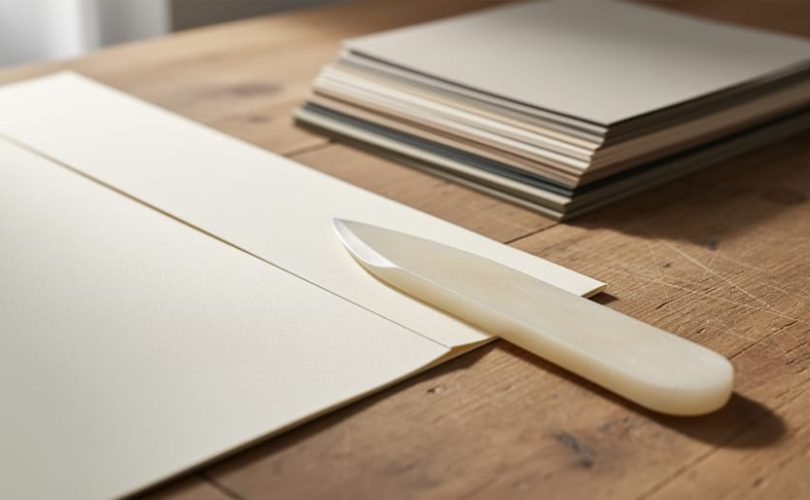
A bone folder is a smooth, flat hand tool traditionally crafted from real cattle bone that creases, scores, and burnishes paper, cardstock, and lightweight materials without tearing or leaving marks. In Canada, you’ll find quality options priced between $5.69 and $13.80, with this 6-inch tool serving as an essential companion for bookbinders, origamists, cardmakers, and increasingly, sustainable apparel entrepreneurs who package their products with the same care they put into creating them.
Unlike metal tools that can bruise delicate paper fibers or leave unwanted shine, bone folders offer a naturally smooth surface that polishes fold lines to crisp perfection. The tool’s tapered edge allows precise scoring along fold lines, while its rounded tip burnishes adhesive areas flat, creating professional results whether you’re binding a custom lookbook, folding branded packaging inserts, or adding finishing touches to product tags.
For small business owners building sustainable brands, the bone folder represents a bridge between craft tradition and modern presentation values. This simple tool requires no electricity, produces no waste, and lasts for years with minimal care. It’s particularly valuable if you’re creating custom packaging that reflects your commitment to quality and environmental responsibility.
The bone folder’s recent expansion beyond traditional bookbinding into custom apparel packaging and boutique retail reflects a broader shift toward hands-on, sustainable business practices. When your brand story emphasizes craftsmanship and eco-conscious choices, the tools you use to present your work matter just as much as the products themselves.
What Is a Bone Folder and Why It Matters for Apparel Businesses
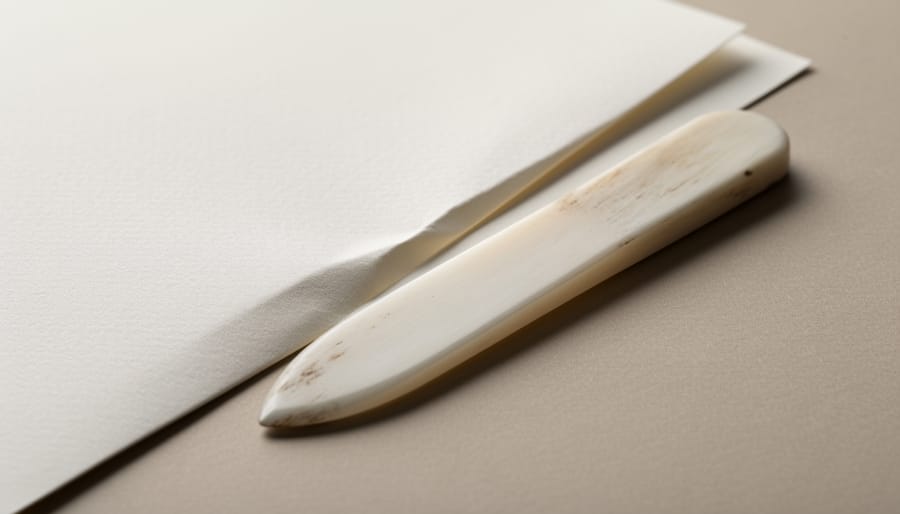
A bone folder is a hand tool that has served bookbinders, paper crafters and designers for centuries, and it is exactly what the name suggests: a smooth, flat implement traditionally carved from cattle bone. The tool typically measures six inches in length and features rounded edges that allow you to crease, fold and burnish paper without tearing or damaging the surface. While its roots lie in traditional bookbinding techniques like saddle stitch binding the bone folder has found new relevance among custom apparel businesses that understand presentation matters as much as product quality.
The construction from real cattle bone is not just traditional, it is functional. Bone provides the right balance of hardness and smoothness to compress paper fibres without leaving scratches or scuff marks, something plastic alternatives struggle to match. When you run a bone folder along a fold line, you are permanently realigning the paper’s internal structure, creating a crisp edge that holds its shape. This precision is what separates amateur-looking packaging from professional presentation.
- Creasing
- Pressing a sharp fold line into paper or cardstock to prepare it for folding. The bone folder compresses fibres along the intended fold, ensuring a clean, straight edge.
- Scoring
- Creating a shallow groove in thicker materials before folding. This technique prevents cracking on heavy cardstock and ensures packaging folds exactly where you want it to.
- Burnishing
- Rubbing the bone folder firmly across a surface to flatten adhered materials, seal edges, or create a polished finish on folded elements.
For custom apparel businesses, these functions translate directly to everyday tasks: assembling branded packaging boxes, creating sharp folds on swing tags, preparing lookbooks for client presentations, and finishing tissue paper inserts that elevate the unboxing experience. When a customer opens your product and finds packaging with crisp, professional folds rather than sloppy creases, they notice. The bone folder turns packaging from an afterthought into a brand touchpoint that reinforces quality and attention to detail.
Practical Uses in Custom Apparel and Print Production
Professional Packaging and Presentation
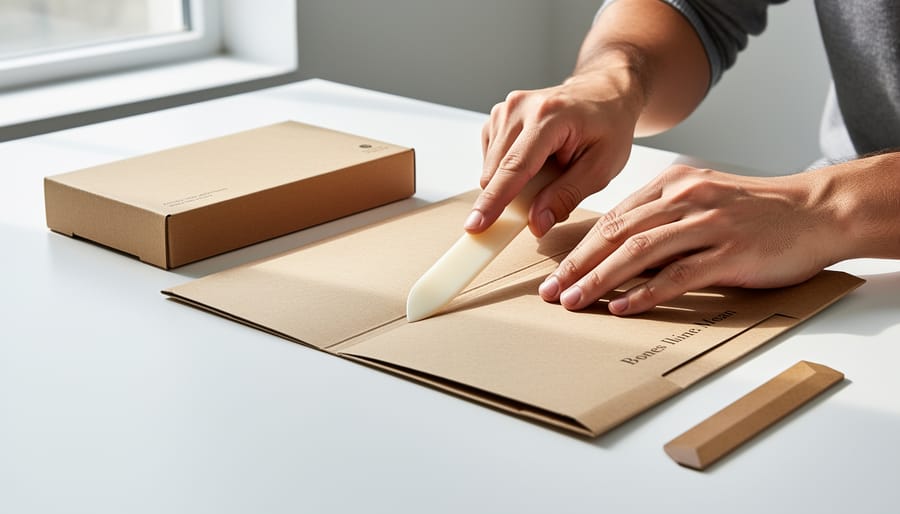
When you’re building a custom apparel brand, presentation isn’t optional, it’s part of the product. A bone folder transforms standard packaging materials into polished, professional touchpoints without requiring expensive machinery or electricity. The tool’s smooth edge creates razor-sharp creases in custom boxes, ensuring panels meet precisely and corners fold cleanly. This matters when you’re hand-finishing small production runs or creating sample kits for wholesale buyers who judge quality at every level.
For tissue paper wrapping and branded inserts, the bone folder delivers what fingers alone cannot: consistent, flat folds that look machine-pressed. Run the tool along your fold line with firm, even pressure, and the paper develops a memory that holds its shape during packing and shipping. This technique elevates unboxing experiences, particularly when paired with thoughtful details covered in our guide to printing labels basics.
The real advantage emerges in small-batch work where automated folding equipment makes no economic sense. Whether you’re assembling swing tag booklets, creating layered packaging for limited releases, or preparing lookbooks for trade shows, a bone folder lets you achieve premium results at craft-production scale, precisely where most custom apparel businesses operate.
Design Mockups and Prototyping
Before committing to expensive production runs, smart apparel businesses work out packaging concepts on paper. A bone folder turns this prototyping phase from frustrating guesswork into precise testing that saves money and catches design problems early.
Creating paper mockups of custom boxes, mailers, and inserts lets you see exactly how your packaging will function in the real world. The bone folder scores clean fold lines into cardstock, helping you test whether a box design closes properly, if your logo placement works, or if insert cards fit the way you envisioned. You can build five different versions of a hang tag design in an afternoon, comparing how they look and feel without ordering sample prints.
This hands-on approach reveals issues that screen mockups miss. A swing tag that looks perfect on screen might feel flimsy at actual size, or a box design might need deeper side panels to accommodate folded garments. Testing with scored cardstock and a bone folder shows you these problems before you place a thousand-unit order.
Pattern work benefits too. When developing custom packaging templates for different product sizes, scoring and folding test sheets helps you verify measurements and adjust designs. The bone folder creates repeatable, accurate creases that let you assess how packaging will hold up through shipping and handling, not just how it photographs for your website.
The Sustainability Connection
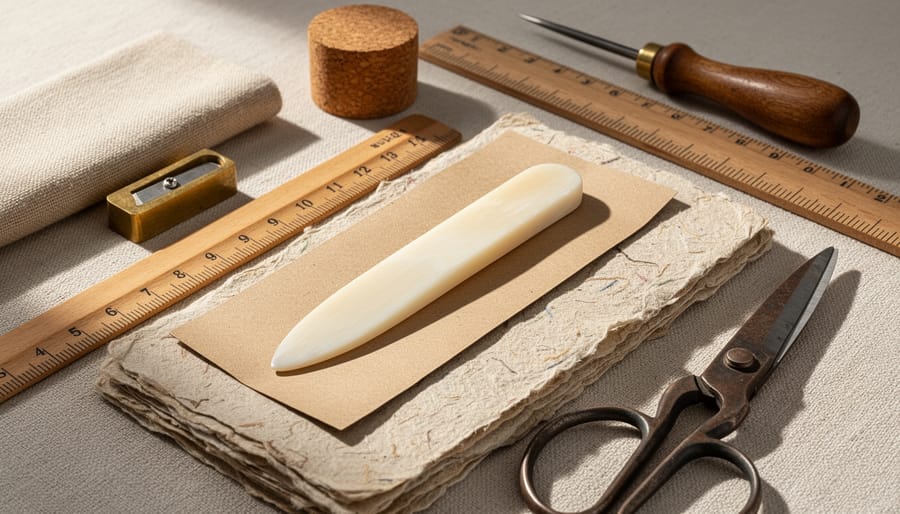
For businesses committed to environmental responsibility, bone folders represent the kind of thoughtful tool choice that aligns actions with values. These simple implements embody several sustainability principles that matter to modern sustainable apparel design operations.
Bone folders are crafted from cattle bone, a natural byproduct of the meat industry that would otherwise go to waste. By repurposing this material into a durable tool, manufacturers prevent waste while creating something genuinely useful. This circular approach to materials resonates with the same thinking that leads entrepreneurs to choose sustainable clothing production methods.
The energy profile of a bone folder is equally compelling. It requires no electricity to operate, produces no emissions during use, and demands no disposable components or consumables. Compare this to heat-based creasing tools or powered scoring machines. While those devices have their place in high-volume production, a bone folder accomplishes the same tasks for small-batch work without drawing power.
Durability matters too. A properly cared-for bone folder lasts decades, often outliving the person who bought it. This longevity stands in stark contrast to plastic alternatives that crack, warp, or lose their edge within months. The investment in a real bone tool, typically around ten to fourteen dollars in Canada, pays dividends through years of reliable use.
At Monkey Prints, we recognize that sustainability extends beyond fabric choices into every aspect of production. Using manual tools like bone folders for packaging and presentation work reduces our environmental footprint while maintaining the quality our customers expect. These traditional implements prove that low-tech solutions can elevate modern sustainable practices.
What to Look for When Choosing a Bone Folder
When you’re ready to add a bone folder to your toolkit, a few key factors will help you choose one that performs well and lasts. The good news is that these are straightforward tools without complicated features, but quality differences matter.
Material authenticity should be your first consideration. Genuine bone folders are made from cattle bone, a natural byproduct that offers the right combination of firmness and slight give. This material won’t scratch delicate papers or fabrics and develops a smooth patina with use. Plastic alternatives exist at lower price points, but they lack the tactile feedback and durability that make bone folders worthwhile. Real bone feels substantial in your hand and won’t flex or crack under pressure.
Size and shape affect how the tool handles different tasks. The standard 6-inch length works well for most custom apparel applications, from swing tags to box assembly. This length gives you enough surface area for creasing larger sheets while remaining maneuverable for detailed work. Some bone folders taper to a point on one end and feature a rounded edge on the other, offering versatility for different folding techniques.
Edge quality separates functional tools from frustrating ones. Run your finger along the edges before purchasing if possible. A well-made bone folder has smooth, polished edges without rough spots or sharp points that could tear paper. The broad surfaces should be flat and even, not warped or pitted.
| Size | Typical Price (CAD) | Best Uses |
|---|---|---|
| 6-inch standard | $5.69-$13.80 | General packaging, swing tags, box assembly |
| 8-inch extended | $15-$20 | Larger format packaging, lookbooks, portfolio work |
| 4-inch compact | $8-$12 | Detail work, small labels, travel kit |
Pricing in Canada typically ranges from around $5.69 to $13.80 for standard 6-inch bone folders. The Art Shack carries bone folder tools within this range, making them accessible for Canadian custom apparel businesses without significant investment. At these price points, you’re looking at a tool that should last years with regular use, making it one of the more cost-effective additions to your production setup. Watch for sales where prices may drop to $11.95 or lower.
Where Canadian Businesses Can Source Bone Folders
Finding bone folders in Canada is straightforward for custom apparel businesses looking to add this tool to their workflow. The Art Shack carries bone folder tools suitable for professional use, with pricing typically ranging from around $6 to $14 CAD depending on sales and specifications. These retailers stock genuine cattle bone folders in the standard 6-inch length that works well for most packaging and presentation tasks.
When purchasing, you’ll find bone folders marketed primarily to bookbinders, origami artists, and card makers, but don’t let that narrow categorization deter you. The tool performs identically whether you’re creasing a lookbook spine or folding custom packaging inserts. Expect a simple, unadorned tool with a smooth finish and tapered edges. Most bone folders arrive ready to use without special preparation.
Canadian craft supply retailers and bookbinding specialists maintain regular stock of these tools since they’re foundational items rather than specialty products. The relatively low price point makes it easy to purchase multiple bone folders for different team members or workstations without significant investment. For businesses ordering other production supplies, adding a bone folder to your cart requires minimal budget consideration while expanding your finishing capabilities considerably.
Adding a bone folder to your custom apparel toolkit represents more than just purchasing another tool. It’s a commitment to craftsmanship that bridges traditional techniques with modern production needs. For under $15, you gain the ability to elevate every customer touchpoint, from the first unboxing to the final presentation of branded materials.
The tactile satisfaction of creating crisp, professional folds by hand reinforces the attention to detail that sets quality brands apart. While digital methods dominate production, these manual finishing touches communicate care in ways automation cannot replicate. Your customers notice the difference between machine-processed packaging and thoughtfully prepared presentation materials.
Beyond aesthetics, choosing tools made from natural byproducts aligns your workflow with genuine sustainability practices. A bone folder requires no electricity, produces no waste, and will outlast countless pieces of equipment that demand regular replacement. It’s proof that old methods often remain the most efficient.
Consider how manual techniques can complement your digital capabilities. The same hands that design on screen can shape the physical experience your products create. Start experimenting with one simple tool, and you might discover that slowing down certain processes actually strengthens your brand’s story and deepens customer connections.