
Responsible online casino play in Canada means setting personal limits, using self-exclusion tools when needed, and recognizing warning signs before gambling becomes harmful. Provincial regulators and licensed operators provide deposit caps, time-out features, and reality checks built directly into platforms, while national resources like the Canadian Centre on Substance Use and Addiction offer 24/7 support. Whether you’re exploring real bitcoin casino games or traditional slots, the framework exists to help you stay in control.
Canadian players benefit from a layered protection system. Each province enforces its own licensing standards, requiring operators to display responsible gambling information prominently and provide access to independent counseling. The tools are practical: you can lock yourself out for days, weeks, or permanently, cap your monthly spend before you deposit a dollar, or receive pop-up reminders tracking how long you’ve been playing. These aren’t suggestions. They’re built-in safeguards designed to interrupt problematic patterns before they escalate.
Understanding your relationship with gambling starts with honest self-assessment. Are you chasing losses? Borrowing money to play? Hiding your activity from family? These behaviors signal the shift from recreation to risk. Fortunately, Canada’s approach emphasizes early intervention over crisis response. Free, confidential helplines connect you with counselors who understand gambling disorder, and many provinces fund treatment programs at no cost.
The goal isn’t to eliminate risk entirely but to equip you with the knowledge and tools to gamble on your terms. This guide walks through Canada’s regulatory landscape, breaks down the most effective harm-reduction tools, and provides clear steps to take if you or someone you care about needs help.
What Responsible Online Casino Play Means in Canada
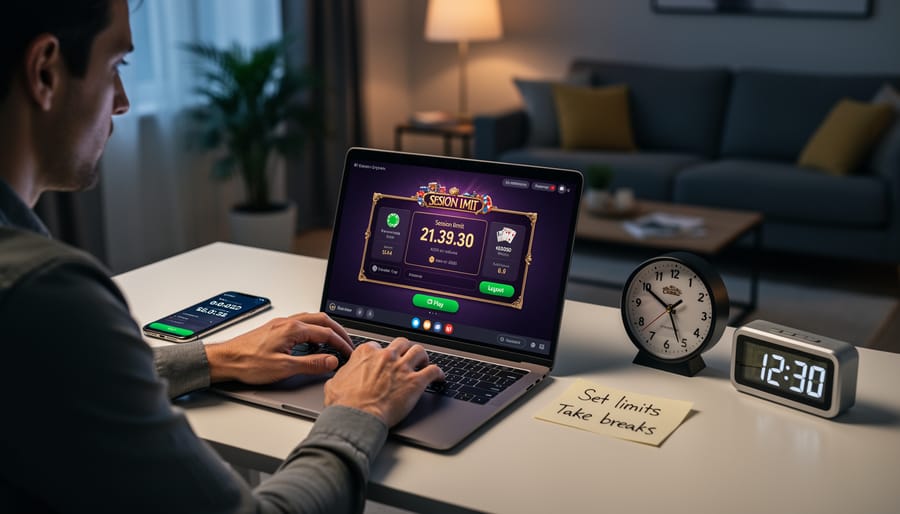
Responsible online casino play in Canada starts with a straightforward idea: gambling should be entertainment, not a financial strategy or emotional escape. The principle is simple, set a budget before you play, stick to a time limit, and stop when the fun stops. Players who gamble safe with tips like these treat online casinos the same way they’d approach a night out: they decide how much they’re willing to spend, enjoy the experience, and walk away when the evening ends.
Self-awareness sits at the heart of responsible gambling. That means checking in with yourself honestly. Are you chasing losses? Playing to forget stress? Spending more than you planned? Recognizing these patterns early makes all the difference. Budget control follows naturally, if you set aside a specific amount for entertainment and treat casino spending like any other discretionary expense, you’re far less likely to overspend. Time management works the same way: deciding in advance how long you’ll play keeps a casual session from drifting into hours you hadn’t intended to lose.
Canada’s regulatory approach reflects these principles by design. Provincial regulators and federal policy frameworks prioritize player safety alongside market access, requiring operators to provide tools that make responsible play practical rather than theoretical. The system assumes players can make informed choices when given the right information and safeguards. Limits, self-exclusion options, and reality checks aren’t buried in fine print, they’re front and center, built into how licensed Canadian platforms operate. The goal isn’t to stop people from playing; it’s to create conditions where they can play safely.
Canada’s Regulatory Framework for Player Protection
Canada operates under a dual regulatory system where both federal and provincial governments share responsibility for gambling oversight. The Criminal Code of Canada establishes the foundational legal framework, prohibiting most forms of gambling while granting provinces the authority to license and regulate gaming activities within their borders. This division means each province develops its own approach to online casino regulation, creating a patchwork of rules rather than a single national standard.
Provincial gaming authorities like the Alcohol and Gaming Commission of Ontario (AGCO), British Columbia Gambling and Lotteries Corporation (BCLC), and Loto-Québec act as primary regulators, setting licensing requirements and enforcing player protection measures. Ontario’s 2022 market opening marked a shift toward regulated private operators, requiring licensed platforms to implement mandatory responsible gambling tools, undergo regular compliance audits, and contribute to problem gambling research and treatment programs. Other provinces maintain government-run online casinos or restrict access to provincially-operated sites.
Enforcement centers on operator compliance rather than individual player behavior. Regulators require licensees to verify player age and identity, display responsible gambling information prominently, and provide access to self-exclusion databases. Operators must also submit regular reports on gambling patterns and intervention effectiveness. Penalties for non-compliance range from financial sanctions to license suspension.
Recent policy developments reflect growing awareness of online gambling risks. Several provinces have strengthened advertising restrictions, particularly around bonus promotions that might encourage excessive play. There’s increasing coordination between provincial regulators to share best practices and align player protection standards, though full harmonization remains distant.
The system’s effectiveness depends on enforcement rigor. Well-regulated markets like Ontario demonstrate how clear rules and active oversight create safer environments, while gaps in other jurisdictions leave players with fewer protections. Understanding your province’s specific framework helps you identify which safeguards apply to the platforms you use.
Tools and Features That Support Responsible Play
Deposit and Betting Limits
Deposit and betting limits let you decide how much money you’re willing to commit over a specific period, usually daily, weekly, or monthly. These caps prevent impulsive overspending by stopping deposits once you hit your threshold. Most Canadian online casinos ask you to set your limits during account registration or within your profile settings. You can typically adjust them downward immediately, but increasing limits often requires a cooling-off period of 24 to 72 hours, a deliberate delay that discourages reactive decisions after a loss. Some platforms also offer betting limits per spin, hand, or wager, which control how much you stake in a single round rather than how much you deposit. The key is choosing thresholds that fit your entertainment budget, not money earmarked for bills or savings. Once set, these limits work quietly in the background, letting you enjoy games without second-guessing whether you’re going too far.
Self-Exclusion Programs
Self-exclusion programs allow players to voluntarily block their access to online casinos for a set period, typically ranging from six months to several years or even permanently. In Canada, these programs operate at both the provincial and individual casino levels.
Provincial programs like Ontario’s iGaming Ontario self-exclusion registry and British Columbia’s GameSense provide centralized exclusion across all regulated operators within that jurisdiction. When you enroll, your account is immediately suspended, deposits are returned, and you cannot open new accounts with any participating operator during your exclusion period.
Individual casino self-exclusion works similarly but applies only to that specific platform. Many international casinos serving Canadian players offer this option through their account settings or customer support.
The process is straightforward: you contact the operator or provincial regulator, choose your exclusion period, and confirm your decision. During this time, operators are legally required to prevent you from accessing their services. Attempting to circumvent self-exclusion by creating new accounts violates terms of service and can result in permanent bans and forfeiture of any winnings.
Self-exclusion is confidential, free, and irreversible until the chosen period expires, designed specifically to protect players when willpower alone isn’t enough.
Reality Checks and Time Reminders
Session timers and pop-up reminders act as a gentle check-in system, interrupting the flow of play to show you how long you’ve been gambling and how much you’ve spent. Most Canadian online casinos offer customizable reality checks that appear at intervals you choose, every 30 minutes, hour, or longer, displaying your session length, total wagered, and current balance. These notifications create natural pause points, giving you a moment to assess whether you’re still playing for fun or whether time has slipped away. Some platforms also include idle timers that log you out after a period of inactivity, preventing accidental prolonged sessions. The key is to use helpful tools proactively: set reminders before you start playing rather than ignoring them once they appear. Think of these features as a built-in mirror reflecting your behavior in real time, making it easier to stick to your intended limits and walk away when you’ve had enough.
Recognizing Problem Gambling: Warning Signs and When to Seek Help
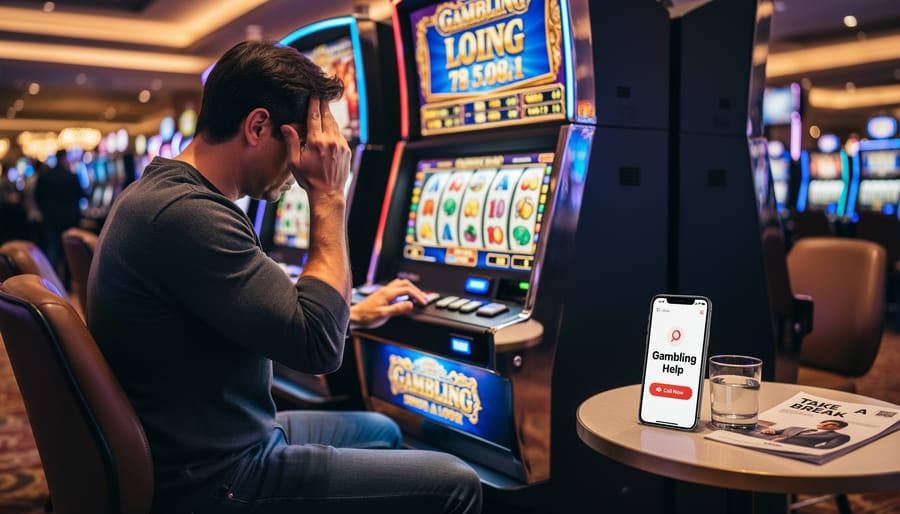
Knowing when gambling stops being fun and starts causing harm is crucial. Problem gambling often develops gradually, making it harder to spot in yourself or someone you care about.
Watch for these behavioral changes: spending more time and money gambling than intended, chasing losses by betting larger amounts to win back what you’ve lost, or lying to friends and family about how much you’re gambling. Some people become irritable or restless when trying to cut back, or they lose interest in hobbies and activities they once enjoyed. Gambling to escape problems or relieve anxiety often signals a shift from entertainment to coping mechanism.
Financial warning signs tend to be more concrete. You might notice unexplained debts, overdue bills despite having income, or money missing from savings without a clear reason. Borrowing money specifically to gamble or using credit cards to fund play sessions indicates a problem. Some people start selling possessions or dipping into funds meant for essential expenses.
The emotional toll matters too. Persistent guilt or shame about gambling, relationship conflicts centered on money or time spent gambling, and declining performance at work or school all warrant attention.
If several of these signs feel familiar, it’s time to reach out. Problem gambling is recognized as a treatable condition, not a character flaw. Speaking with a counselor, calling a helpline, or confiding in someone you trust are all valid first steps. Many Canadians have sought help and regained control, recognizing the problem early makes recovery easier and prevents the situation from worsening.
Canadian Resources and Support Services
Canada offers a comprehensive network of support services specifically designed to help anyone struggling with gambling. These resources are free, confidential, and accessible across all provinces and territories, ensuring that help is never more than a phone call or click away.
The national Problem Gambling Helpline (1-866-531-2600) provides 24/7 support in English and French, connecting callers with trained counselors who understand gambling-related concerns. Many provinces also operate their own dedicated services tailored to local needs and available in multiple languages.
| Organization | Region | Service Type | Contact |
|---|---|---|---|
| ConnexOntario | Ontario | Helpline, referrals | 1-866-531-2600 |
| Gambling Help BC | British Columbia | Counseling, online chat | 1-888-795-6111 |
| Gambling: Aide et Référence | Quebec | Helpline, support groups | 1-800-461-0140 |
| Alberta Health Services | Alberta | Counseling, self-help tools | 1-866-332-2322 |
Beyond helplines, most provinces offer in-person counseling through community health centers, online chat support, and peer support groups where people share experiences in a safe environment. Family members affected by someone else’s gambling can also access specialized counseling and guidance. All services maintain strict confidentiality, and seeking help carries no legal or financial consequences. Whether you’re questioning your own habits or worried about someone else, reaching out is a sign of strength, not weakness.
Frequently Asked Questions About Responsible Play in Canada
Setting limits and using responsible gambling tools often raises practical questions. Below are answers to some of the most common concerns Canadian players have when managing their online casino activity.
Can I change my deposit limits once they’re set?
Yes, you can adjust your limits at any time. Increases typically require a waiting period of 24 to 72 hours to take effect, while decreases are usually applied immediately to provide quick protection when needed.
How long does self-exclusion last?
Self-exclusion periods vary by program and your choice. Most Canadian platforms offer options ranging from six months to permanent exclusion, and many provincial programs coordinate across multiple operators to ensure the restriction is honored widely.
Will casinos know if I self-exclude from another site?
Provincial self-exclusion programs share information among participating operators within that province, but exclusions don’t automatically transfer across provincial borders or to offshore sites. Some national voluntary programs help coordinate broader coverage.
Are responsible gambling tools required by law in Canada?
Requirements vary by province. Provincially licensed operators are typically mandated to provide deposit limits, self-exclusion options, and reality checks, while offshore sites may offer them voluntarily to appeal to Canadian players.
Many players worry that setting limits will reduce their enjoyment or make them feel restricted. In practice, most find the opposite: knowing they have guardrails in place actually makes the experience more relaxing. You can focus on the entertainment itself rather than second-guessing your spending.
If you’ve taken a break through self-exclusion and want to return, the process is straightforward but deliberate. Contact the operator or provincial program directly when your exclusion period ends. Many require a brief waiting period after your request to reinstate access, giving you time to confirm the decision. There’s no judgment in taking a break or in coming back, responsible play is about finding the balance that works for your life.
Responsible online casino play keeps entertainment enjoyable, sustainable, and free from stress. Canada’s regulatory framework, combined with the practical tools available on licensed platforms, gives you everything needed to stay in control. Setting limits, tracking your time, and recognizing warning signs before they escalate are straightforward steps that make a genuine difference.
You don’t have to wait until something feels wrong to use these tools. Being proactive protects both your budget and your well-being. If you ever need support, national and provincial resources stand ready to help, confidentially and without judgment.
This approach to informed mindful choices extends beyond online casinos. Whether you’re selecting entertainment, clothing, or everyday services, making better decisions means considering long-term impact alongside immediate enjoyment. Play responsibly, use the tools that work for you, and remember that maintaining balance keeps the experience positive for the long run.