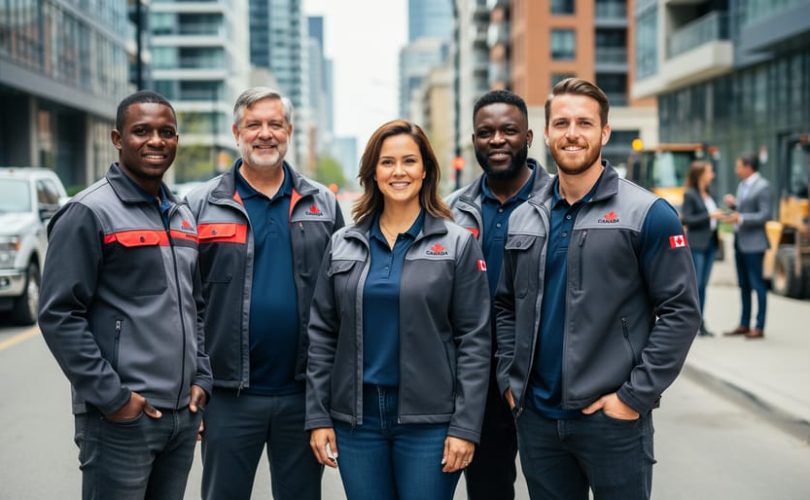
Your company’s image walks through the door before anyone says a word. Custom business apparel transforms employees into brand ambassadors, creating instant recognition whether your team is at a trade show, client meeting, or job site. For Canadian businesses in 2026, the shift toward personalized workwear reflects more than aesthetics. It’s about building cohesive team identity while meeting practical needs for durability and comfort.
The investment pays dividends beyond appearance. Employees wearing coordinated, professional apparel report stronger team connection and pride in their work. Clients perceive uniformed teams as more trustworthy and established. Quality custom pieces last years when properly maintained, making the per-wear cost surprisingly affordable compared to constantly replacing generic alternatives.
Today’s customization options extend far beyond screen-printed polo shirts. You can source everything from moisture-wicking performance wear for active industries to tailored button-downs for corporate settings. Embroidery, heat transfer, and direct-to-garment printing each offer distinct advantages depending on your logo complexity, fabric choice, and budget.
The process has become remarkably straightforward. Most suppliers offer online design tools, bulk pricing that scales with your order size, and faster turnaround than ever before. Sustainability-minded businesses can now choose organic cotton, recycled polyester, and low-impact dyes without sacrificing quality or drastically increasing costs. Understanding your options means finding apparel that truly works for your team’s daily reality.
The Business Case for Custom Apparel in 2026
Canadian businesses are waking up to something their competitors already know: branded apparel isn’t just clothing, it’s a marketing asset that works every single day. When your team wears custom uniforms or branded workwear, they become walking billboards. Every client meeting, trade show, job site, or customer interaction becomes a brand touchpoint. That visibility compounds over time in ways traditional advertising can’t match.
The numbers tell the story. Canada’s custom apparel market reached USD 70.25 million in 2024 and is projected to hit USD 122.16 million by 2032, growing at 7.16% annually. This isn’t a fad. Businesses across sectors are realizing that investing in custom business apparel pays dividends in brand recognition and professionalism.
Beyond the billboard effect, custom apparel solves real operational challenges. It builds team cohesion. When everyone wears the same branded uniform, it creates a sense of belonging and equality, whether you’re managing a retail floor, a restaurant kitchen, or a construction crew. New employees feel part of the team from day one. Customers know immediately who to ask for help.
Professionalism matters more in 2026 than ever. A team in coordinated, well-designed custom apparel signals competence and attention to detail before anyone says a word. That first impression shapes how clients perceive your entire operation, especially in client-facing industries like hospitality, real estate, and professional services.
Corporate adoption has accelerated the shift. Companies are using custom apparel for promotional campaigns, trade show giveaways, and employee merchandise programs. It’s not just uniforms anymore. Branded hoodies, polo shirts, and jackets have become part of how businesses engage employees and represent themselves in the market. The result is a growing recognition that custom business apparel is infrastructure, not swag.
Types of Custom Business Apparel That Work
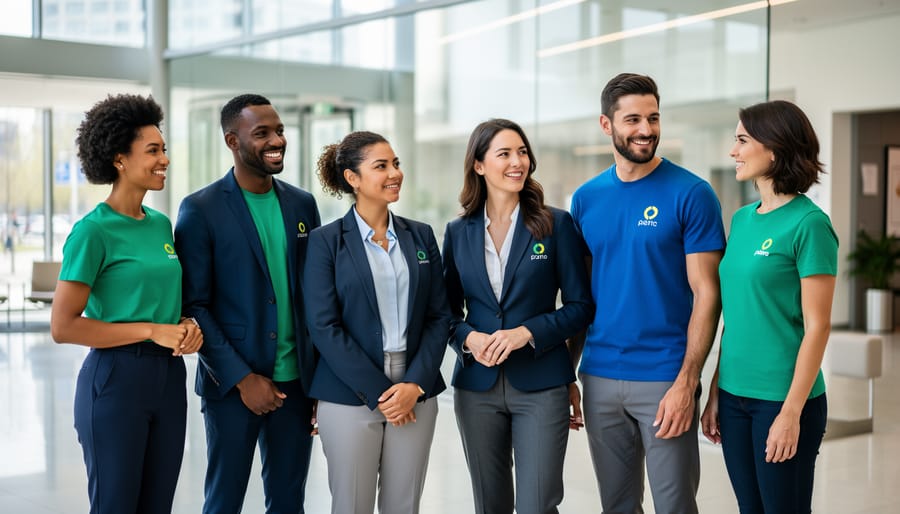
Choosing the right apparel for your team depends on your industry, work environment, and how you want to represent your brand. The Canadian market offers five main categories: coats, shirts, pants, suits, and skirts, each serving different professional contexts.
Shirts remain the most versatile choice across industries. Polos work well for retail teams, hospitality staff, and trades where mobility matters. Button-downs suit office environments, sales teams, and professional services. They’re easy to customize with embroidered logos and comfortable for all-day wear.
Coats and jackets fill a specific need in Canada’s climate. Think branded fleece for warehouse teams, soft-shell jackets for outdoor work crews, or blazers for client-facing roles. They’re walking billboards that actually get used, especially through our long winters.
Pants and suits target professional environments where appearance directly impacts client perception. Law firms, financial services, and corporate offices often opt for suits to maintain a polished image. For less formal settings, custom pants paired with branded shirts strike a balance between comfort and professionalism.
Skirts fit industries where traditional business attire remains standard, though they’re less commonly customized than other categories. Some hospitality and corporate teams include them as part of comprehensive uniform programs for female staff.
Industry context matters more than the garment type. A construction company might stick to jackets and shirts, while a hotel needs the full range. Retail stores often choose matching polos and pants. Tech startups might only brand hoodies and tees. The key is matching your selection to how your team actually works and where they interact with customers.
Customization Techniques That Last
Your logo will outlast your business cards if you choose the right customization method. The three dominant techniques in the Canadian custom business apparel market, screen printing, embroidery, and sublimation, each deliver different results depending on your needs.
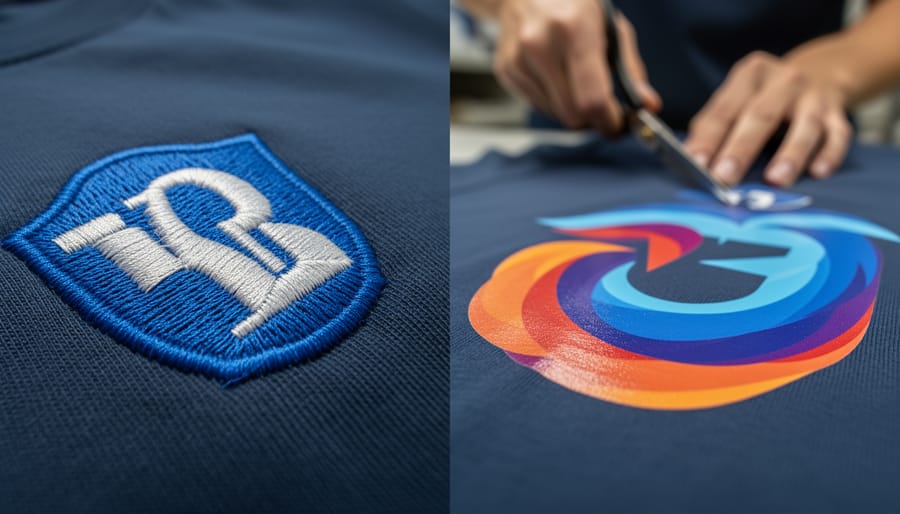
Screen printing works best for bold, simple designs on cotton or cotton-blend fabrics. It’s the go-to for promotional t-shirts, work polos, and team hoodies where you need vibrant colours and a soft feel. The ink bonds with the fabric, so designs hold up through hundreds of wash cycles without cracking or fading. For businesses ordering larger quantities of uniforms with straightforward logos, screen printing offers excellent durability at a reasonable cost.
Embroidery adds a premium feel that signals quality. Thread stitched directly into the fabric creates a textured, three-dimensional logo that won’t fade, peel, or wash out. This technique shines on structured items like dress shirts, jackets, and caps where you want a professional, polished look. It handles detailed designs well, though extremely intricate logos with tiny text can lose clarity. The trade-off is worth it for businesses that want their branding to communicate permanence and craftsmanship.
| Technique | Best For | Durability | Ideal Fabrics |
|---|---|---|---|
| Screen Printing | Bold logos, large quantities, casual wear | Excellent (hundreds of washes) | Cotton, cotton blends |
| Embroidery | Premium items, structured garments, small details | Superior (virtually permanent) | Twill, denim, polo knits |
| Sublimation | Full-colour designs, athletic wear, all-over prints | Excellent (embedded in fabric) | Polyester, performance blends |
Sublimation uses heat to turn ink into gas that bonds with polyester fibres at the molecular level. The result is a print that becomes part of the fabric rather than sitting on top of it. This technique excels for complex, full-colour designs and athletic wear where breathability matters. Because the ink is embedded, it won’t crack, peel, or fade from sweat and frequent washing. It’s limited to polyester and light-coloured fabrics, but for performance uniforms or all-over prints, nothing else compares.
Your choice depends on three factors: what you’re printing, who’s wearing it, and how often it’ll get washed. A restaurant needing durable aprons might choose screen printing, while a law firm ordering blazers would prefer embroidery. Consider how your team will use the apparel daily, and match the technique to those conditions. The same principles apply whether you’re customizing garments or printing labels for branded packaging.
Sustainable Business Apparel: More Than a Trend
Sustainability has shifted from a nice-to-have to a baseline expectation for Canadian businesses in 2026. Customers, employees, and partners now evaluate companies on their environmental practices, and your apparel choices send a clear message about your values.
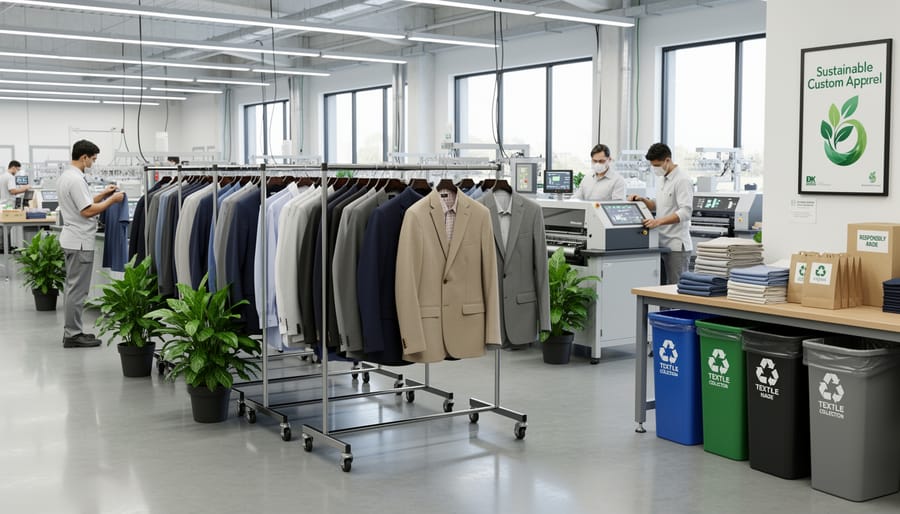
Choosing sustainable clothing for your business apparel means considering both materials and production methods. Organic cotton, recycled polyester, and bamboo blends reduce environmental impact while delivering the durability your team needs. These fabrics perform well with customization techniques like embroidery and screen printing, so you don’t sacrifice quality for ethics.
Ethical production matters just as much as materials. Canadian businesses increasingly partner with suppliers who maintain transparent supply chains, fair labour practices, and reduced waste processes. This alignment with corporate social responsibility goals strengthens your brand reputation and resonates with conscious consumers who make purchasing decisions based on a company’s values.
The business case goes beyond good intentions. Sustainable apparel often lasts longer, reducing replacement costs over time. Higher-quality garments withstand frequent washing and daily wear better than cheaper alternatives, which means your team looks professional longer and your investment stretches further.
For companies serious about sustainability, working with providers who share these values makes implementation easier. Monkey Prints prioritizes sustainable materials and practices throughout the customization process, helping businesses build cohesive branded wardrobes without compromising environmental commitments. This partnership approach ensures your custom apparel reflects your company’s authentic stance on sustainability rather than serving as superficial greenwashing.
When your team wears sustainably produced custom apparel, you create walking proof of your corporate values every single day.
How to Order Custom Business Apparel for Your Team
Ordering custom business apparel doesn’t need to be complicated, but preparation makes all the difference. Whether you’re ordering online or working directly with a local supplier, starting with the right information streamlines the entire process.
Before you reach out to any provider, gather three essentials: high-resolution logo files (vector formats like AI or EPS work best, though high-quality PNG files can work too), a team size breakdown by garment size, and your target quantity. The more accurate your size counts, the less waste you’ll face when apparel arrives. If you’re unsure about sizes, most suppliers can provide fit samples or detailed sizing charts.
Pricing in the custom apparel market works on a sliding scale, larger quantities and simpler customization typically lower your per-piece cost. A left-chest embroidered logo on 50 polo shirts will cost less per unit than a full-colour screen print on 12 jackets. Don’t hesitate to ask suppliers for tiered pricing quotes at different quantity levels; you might find that ordering 75 pieces instead of 50 brings your unit cost down enough to justify the extra inventory.
- Share your logo files and design vision with your chosen supplier
- Review and approve a digital mockup or proof
- Confirm quantities, sizes, and final pricing
- Place your order with any required deposit
- Receive production updates as your apparel is customized
- Inspect your finished garments upon delivery
Many Canadian suppliers now offer online tools like Design Maker that let you visualize your logo on different apparel styles before committing. These platforms can speed up the approval process and give you more control over the design direction.
Ask potential suppliers about their fabric options, what happens if sizing issues arise, and whether they offer reorder programs that make future orders faster. A good supplier will walk you through material choices and explain trade-offs between cost, durability, and comfort rather than pushing a single solution.
Custom Web-Stores: Simplifying Apparel for Growing Teams
A custom web-store solves the apparel challenge that keeps HR managers and brand directors up at night: how do you keep every location, new hire, and team member in proper branded gear without drowning in spreadsheets and re-order requests?
Think of it as your company’s private online store, pre-loaded with your approved apparel and branding. Employees log in, select their items and sizes, and you maintain complete control over what’s available. For franchises with 15 locations across Ontario or e-commerce companies onboarding remote staff monthly, it’s the difference between chaos and consistency.
The brand benefits are immediate. Every jacket, polo, and hat comes from the same approved template with your exact logo placement and colours. No more off-brand variations because someone at the Edmonton office used a different supplier. Inventory headaches disappear too, many print-on-demand tips apply here, where items are produced as ordered rather than sitting in a warehouse.
Monkey Prints builds custom web-stores specifically for Canadian businesses managing ongoing apparel needs. You get a branded portal that reflects your company identity, flexibility to add seasonal items or new products, and reporting that shows exactly what each department is ordering. It works particularly well for companies with regular onboarding cycles, multiple retail locations, or teams that need easy access to replacement workwear.
The setup handles the logistics you’d rather not: size charts, approval workflows if you want them, and direct shipping to individual addresses across Canada.
Custom business apparel isn’t just clothing, it’s a strategic asset that pays dividends in brand recognition, team unity, and market credibility. Canadian businesses investing in quality custom workwear today are positioning themselves ahead of a market projected to nearly double by 2032. Partner with a provider who shares your commitment to sustainable materials, customer service, and expert craftsmanship. Start building your brand identity through apparel that reflects your values and leaves a lasting impression.